
Fascinating Sabah - Wildlife cruising on Kinabatangan
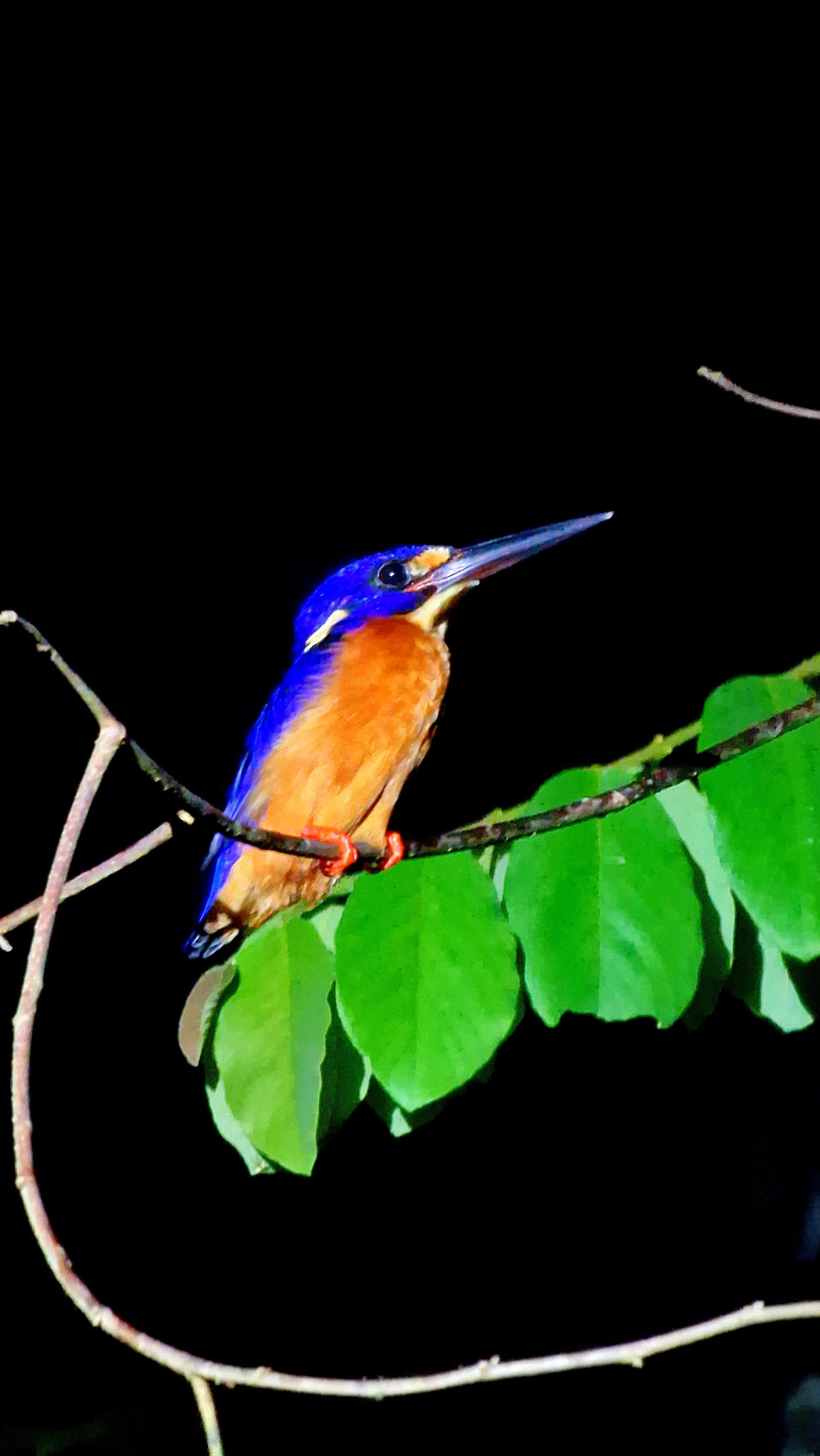
The night was dark and it was raining. Despite the bad weather, the boat headed out on Kinabatangan river in search for wildlife. It did not took long to spot a crocodile hunting on the riverbanks. It was small but big enough that you would not want it to bite your hand. Sleeping birds on low hanging thin branches, snakes sneaking up on them hoping to get some dinner, the haunting sounds of tree frogs quacking deep in the jungle, the crackling sounds of outboard motors…
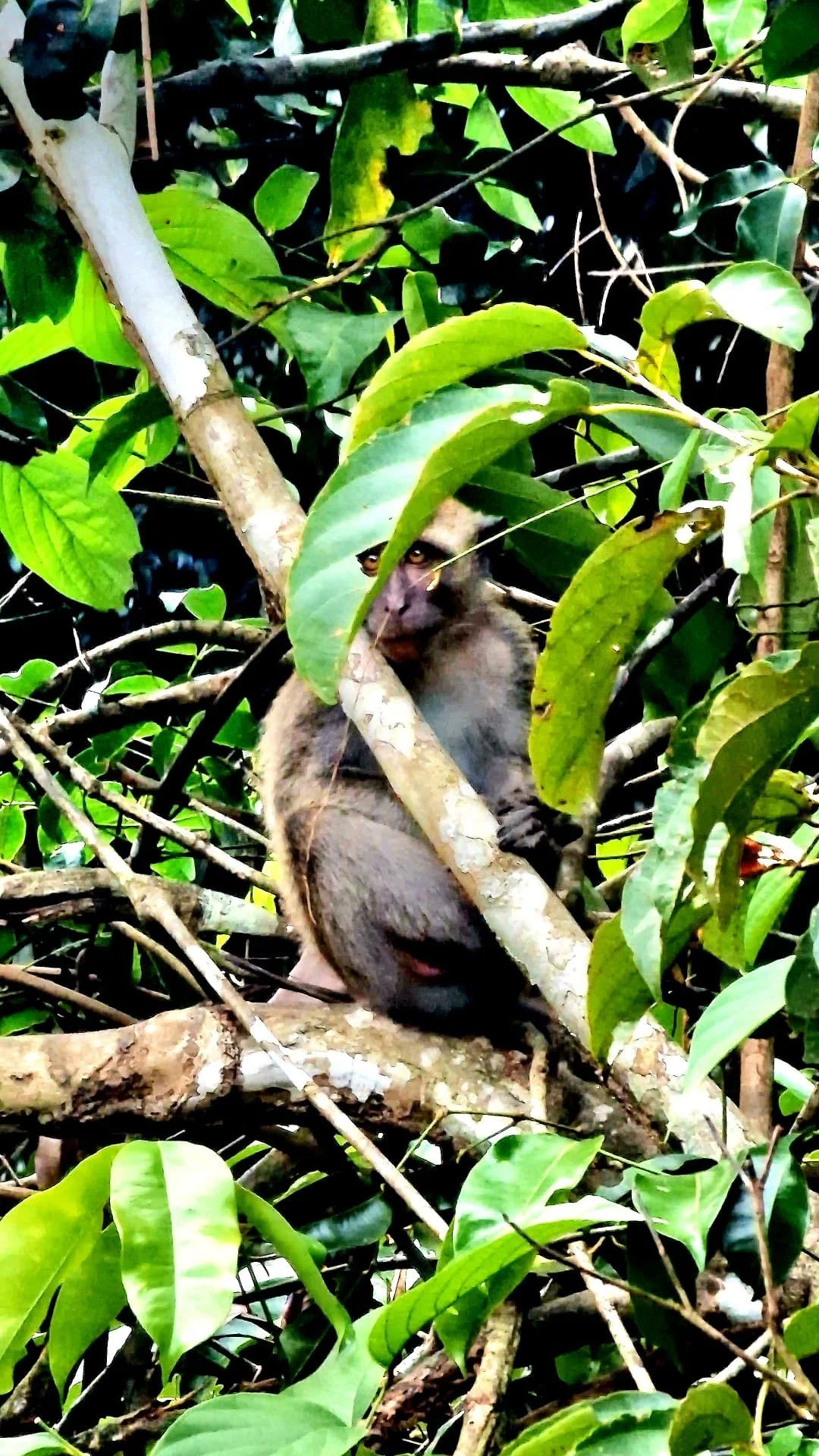
Earlier, during the afternoon cruise, we saw many different species on the brink of extinction: Bornean Pygmy Elephants, Proboscis Monkeys, Malaysia’s national bird, the Rhinoceros Hornbill and - the one and only - Orangutans! Kinabatangan wildlife cruising feels like stepping into a nature documentary!
In summer 2025 I travelled through Sabah, the Land below the Wind, Malaysia’s second largest state, sharing the island of Borneo with Sarawak, Brunei, and Indonesian Kalimantan. My trip started on Mabul Island, where I did several snorkeling trips around the legendary island of Sipadan, brought me to Semporna and Sepilok and ended in Sukau, a small village on the shores of Kinabatang river, a prime location for wildlife viewing. After spending a few days and nights at Tanjung Bulat Jungle Camp near Lamag, the bar was set very high. I tought it could not get any better than this. It kind of did and it kind of did not. But let me start from the beginning, because it was quite an adventure.
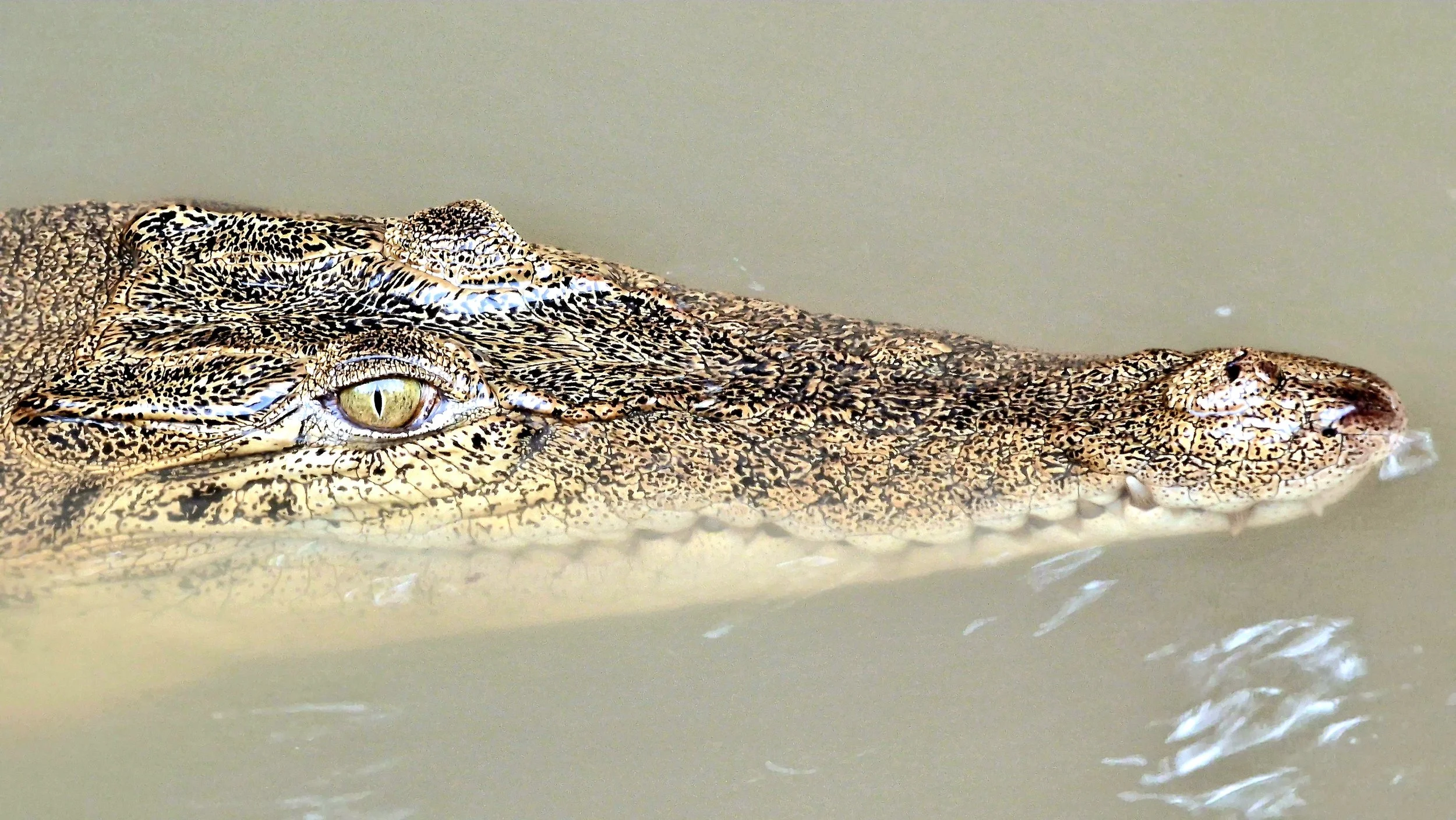
Click the picture to watch a short clip on Youtube of the wildlife safaris I did in Sukau.
From Sandakan to Sukau
Coming from the oxbow lake near Lamag, I had one night in Sandakan, to wash my sweaty and muddy clothes after an amazing time in the Bornean jungle. I went shopping for some gifts to take home. I found Sabah Tea, a very mild and tasty black tea, which is a great gift for tea-lovers. The mini-van from Sukau Greenview Lodge picked me and some other guests up at Hotel Sandakan. When heading out of town, we had a minor car crash. The driver said he haid a break jam but I was sure he ran a street sign over (because it was in the middle of the roundabout after a rough stop with loud noises). Thankfully nobody was hurt - and the birthday cake that was with us in the car was unharmed - but we had to wait for a replacement car. Therefore we ran a bit late and kind of messed up their schedule.
When you book wildlife tours (and diving and snorkeling trips) in Sabah, be prepared for schedules with military precision. Brace yourself for getting up very (!) early in the morning and squeezing meals between cruises, jungles walks and cultural activities. Travelling through Sabah ain’t cheap but they make sure that you get a lot for your money!
They pick you up, no matter where you are. It usually is included in the price. Forget about Grab. The distances are crazy. You will drive for hours through never ending plantations before reaching your destination, in that little bit of jungle that is left with all the animals squeezing into a narrow strip of forest, fighting for survival.
Sukau Greenview Lodge
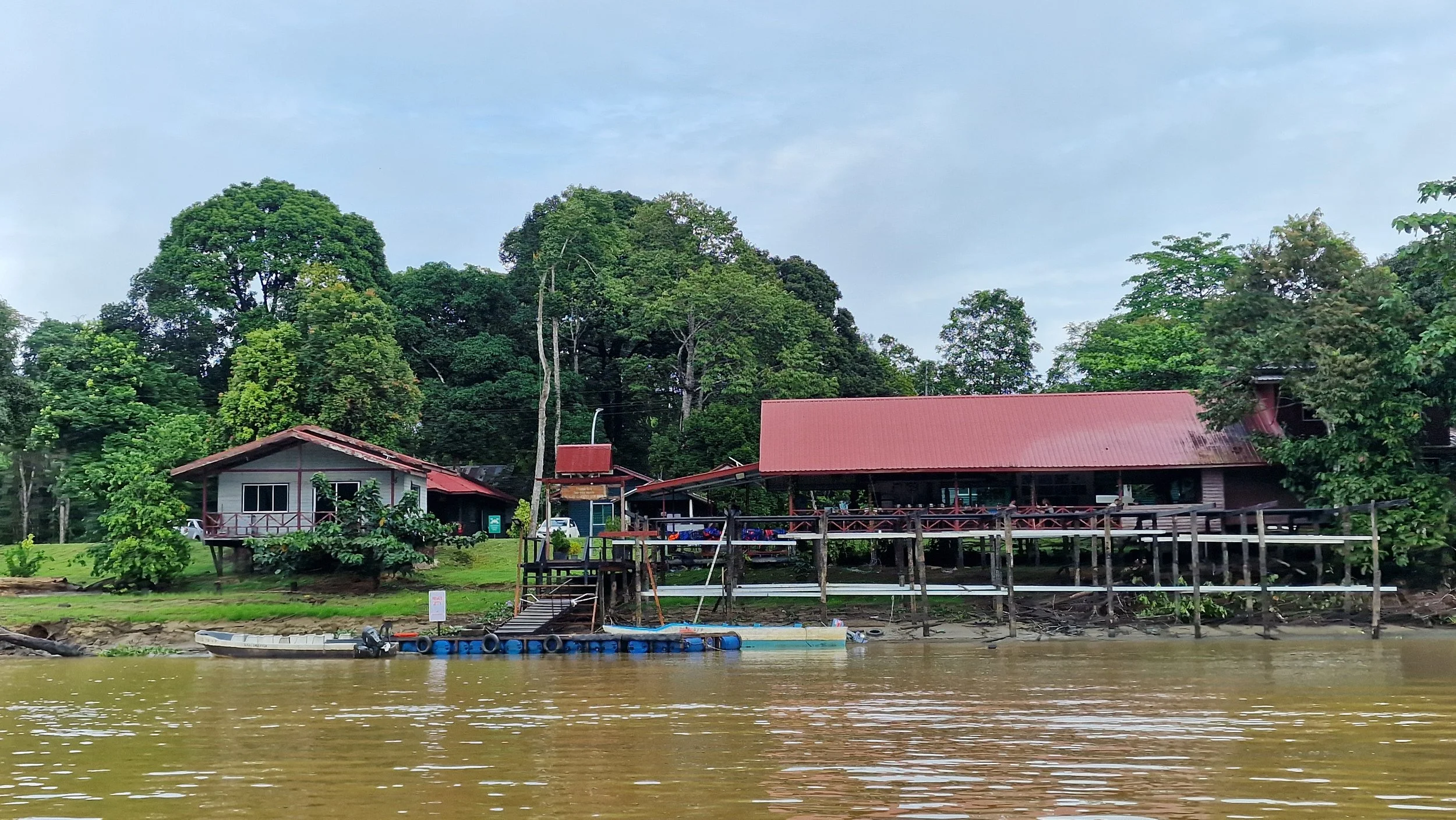
Sukau Greenview Lodge, viewed from the water. The long building is the reception with dining area and the jetty on the left. The lodges are in the back of the building, some with jungle view.
I stayed at Sukau Greenview Lodge, one of the countless lodges in Sukau. Sukau is a small village on the shores of Kinabatangan River and the hub for wildlife river cruises. You will not be the only one there. It was a bit of a shock after staying at Tanjung Bulat Jungle Camp, a very exclusive experience. There, the camp was the only habitation at the oxbow lake, and our boat was the only boat heading out either on the lake or that part of Kinabatangan. In Sukau instead, the boat traffic is heavy. From the lodge I stayed at, there were around 10 to 15 boats heading out for every cruise - and this was just from Sukau Greenview Lodge!
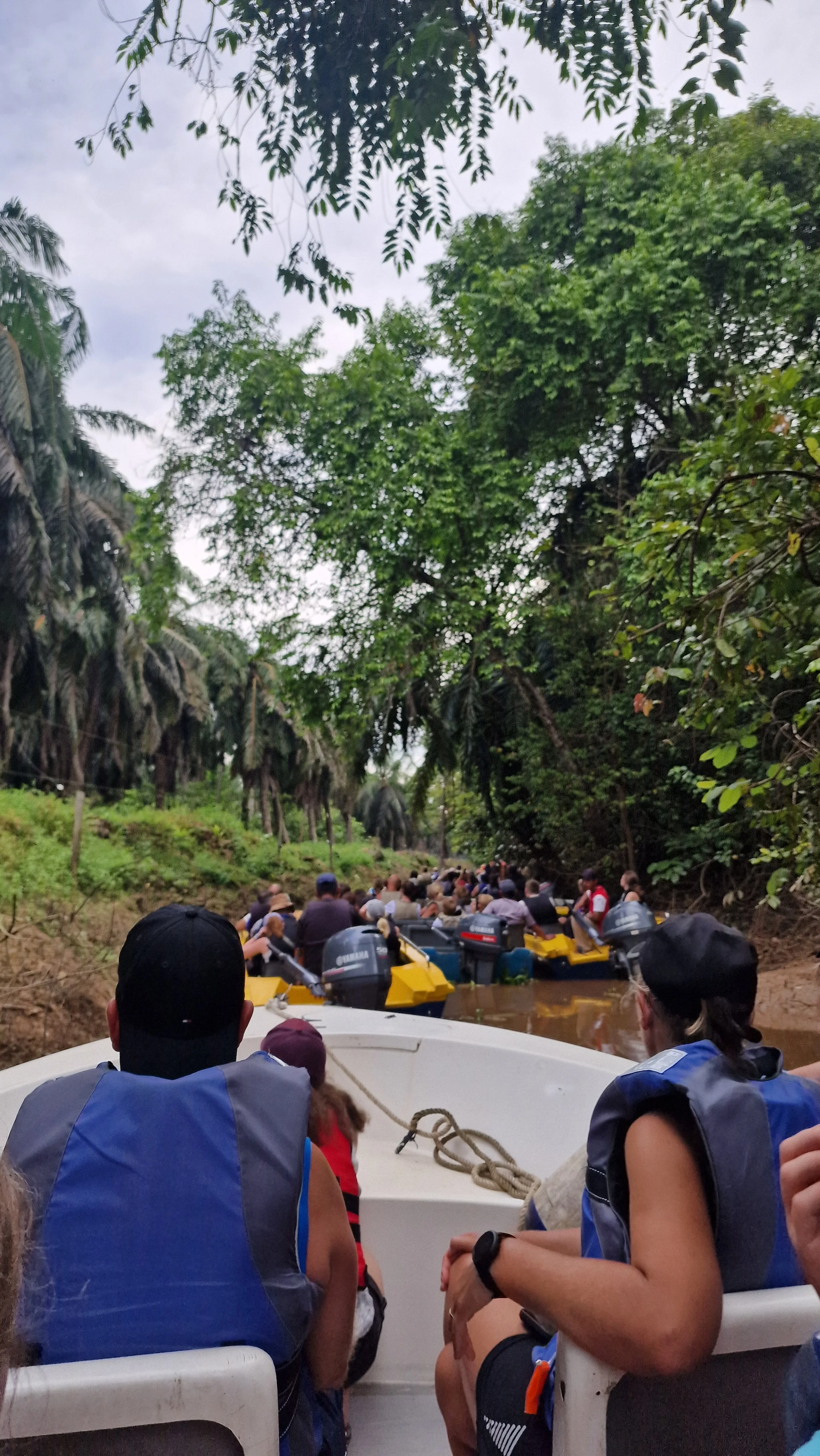
The guides let each other know where the big fives are so all the boats head to one spot. There was a wild orangutan on the palm tree.
Due to the little accident we had, we were running late and kind of messed up their schedule. We got a briefing of dos and don’ts in the dining area, got the keys for our lodges, could throw in our luggage and went straight on the first cruise. I did not even have time to take a shower or unpack my luggage. I just grabed what I needed for the cruise and ran down to the jetty. Everybody was equipped with a life jacket. We were split in groups (they shout out your names), assigned a boat (they tell you the guides name) and off we went. The had to handle well over 80 people to get them on the boats.
Well, the luck I had with the car continued: In the middle of the river, the engine stopped working. Our captain had to call another boat to rescue us and we continued our first river cruise squeezed on a boat with a big group. We were rewarded with the sighting of some pygmy elephants. It was in a small side arm of Kinabatangan. There were dozens (!) of boats, all going after the elephants. We had to take turns to walk to the front of the boat, take a look, go back, so that the next person could take their turn.
In the middle of the chaos of boats trying to get closer or turn around, the rangers came with their police-like looking boat to make sure nobody violated the laws on keeping the right distance to wildlife.
Back in the lodge, dinner was waiting. It was time for the buffet brawl. They had to feed all the people before going for the night cruise. Only after the night cruise I finally managed to get a shower, recover from the trip from Sandakan to Sukau and organize my luggage.
The lodge was very nice. I had a lovely room at the end of the wooden planks. I could spot many animals from my room because I had a direct view of the jungle. My room was spacious, I had an abundance of water bottles ready for me, aircon, hot shower and a little terrace. Their staff was nice, the guides super knowledgable and the food was very tasty. There was a big choice of different dishes, for breakfast, lunch and dinner. Tea and little snacks were available throughout the whole day in the dining area. However, we often had to fight off monkeys that helped themselves to a tasty snack.
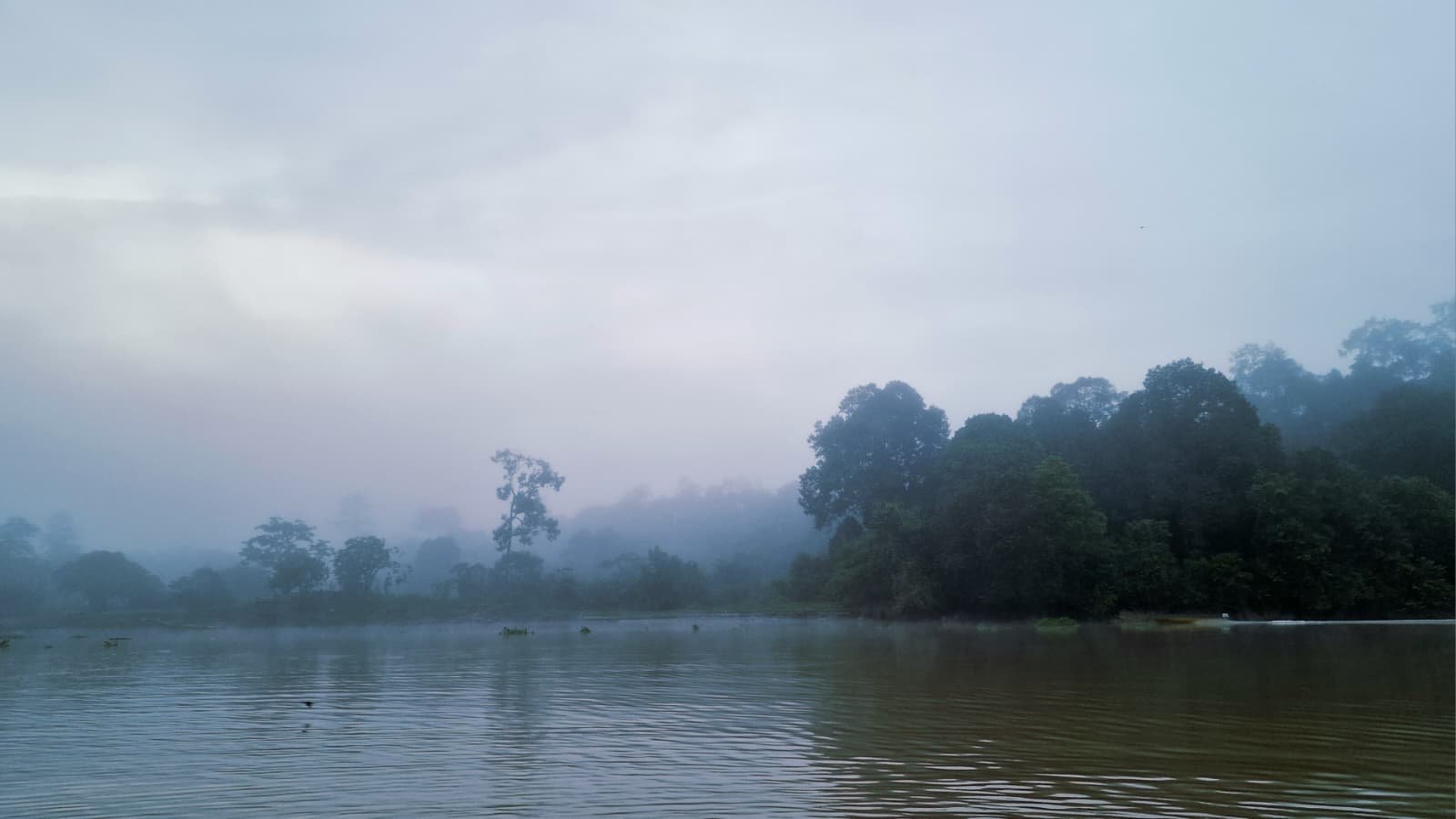
Morning mist on Kinabtangan river. Who wants to see the animals have to get up early in the morning. Very early.
The schedule for the river cruises and the jungle walks were tight. The early morning cruises started at around 6 am, before breakfast, the night cruises were at 8 pm, after dinner. There were other activities such as culture immersion, afternoon jungle walks, night walks and afternoon cruises. I felt a bit rushed. I wish I would have had time to explore Sukau a bit by myself. However, we were advised to stay away from the shore. The Swine fever killed most wildboar in the area. The crocodiles lost their main source of food but they learnt that dogs taste equally as good as wildboar and are easy to hunt. But dogs do not roam in the jungle but near habitations of humans. So crocodiles would hunt for dogs around villages and sometimes go after humans, if they had the opportunity. Therefore, we were told to stay away from the water. We also were advised not to be out in the dark, because the elephants were looking for food close to the village at night. They had babies, so they were quite aggressive.
The activities - What to expect
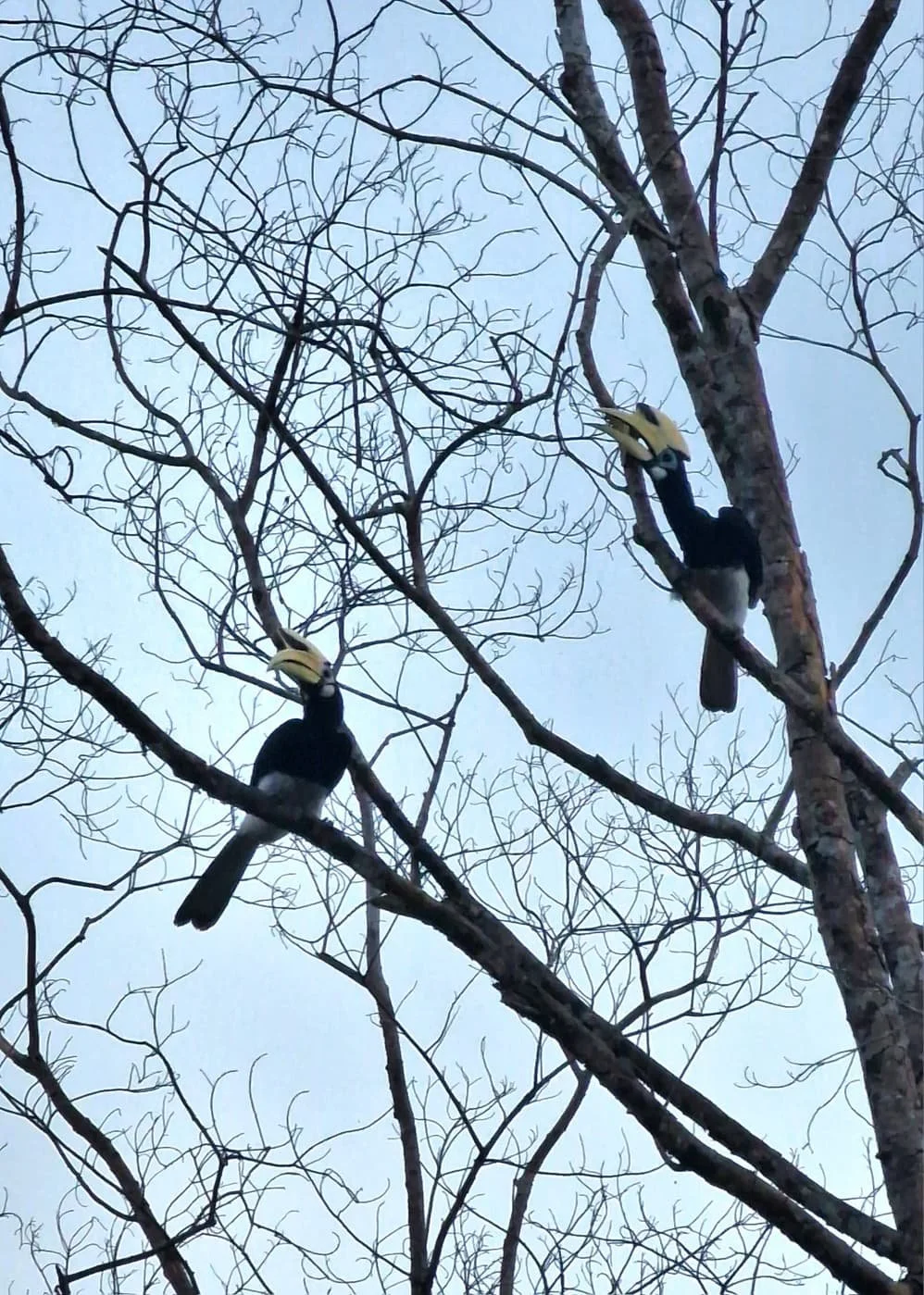
There is one reason why people from allover the world travel to Sukau: to see the wildlife. Oh boy! And how you will see it! However, you will not be the only one. Depending on the package you booked, you will have specific tours, cruises and jungle walks. Most people head to Sukau to see the “Borneo Big Five” (Orangutans, elephants, Proboscis Monkeys, Hornbills and crocodiles) but also other birds - besides Hornbills - or many other smaller animals. The animals are mostly active at dusk or dawn, therefore you will have early morning cruises, late afternoon cruises (the sun sets early in Sabah) and night cruises. There are jungle walks, either during the day or at night. We had to jump the night walk, because of the elephants. It was too dangerous to run into an elephant in the dark in the middle of the jungle. It was replaced by a night cruise.
The cruises aka river safari (day and night)
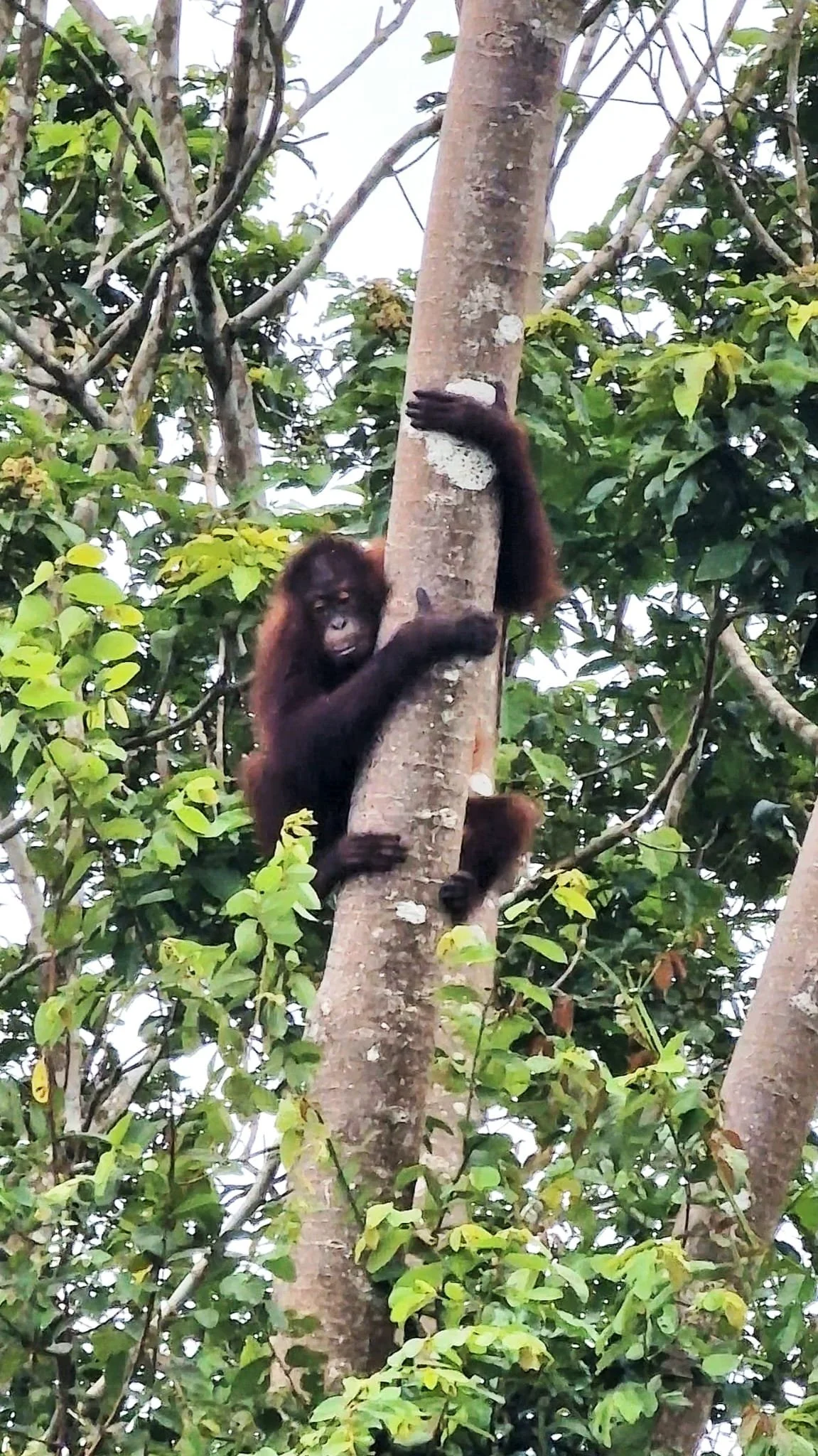
Seeing this juvenile Orangutan carry the future of his species on his shoulders was a very emotional moment.
You sit comfortably on a boat and the captain takes you to the animals while the guides share their knowledge about the animals you see or are about to see. The guides know where the animals feed or sleep, therefore they are heading to these places. Once they see something exciting, they let each other know. As a result, everybody will head there, so dozens if not hundreds of boats will race to the same place. For me personally, it felt a bit commercial. On the other hand, thanks to the wildlife tourism in the area, they passed new laws on re-forestation, turn lands that once were monocultures into jungle, build wildlife corridors and take action to protect endangered animals such as Orangutans or Clouded Leopards. The locals - the so called “river people” - are involved in conservation efforts. Wildlife tourism has opened up many job opportunities for them, other than underpaid labour on the plantations. Seeing a juvenile Orangutan climbing down its tree to hide from all the cameras and phones, carrying the survival of his species on its shoulders, was a very emotional moment.
It is not guaranteed to see the big fives, however we did. I could only catch a glimps of the elephants but had great sightings of all the others, as well as smaller species. My guide Bruno was very involved and knew a lot about the jungle and its animals. He basically grew up in and with the jungle.
Everybody wants to sit in the front of the boat. Sure, you will have a good position to take pictures but they make sure to turn the boats that everybody can take a look. Sitting in the back has the advantage that you are closer to the guide, can hear him properly and ask questions without shouting through the whole boat over the engine.
If the rain is too heavy, the cruises will be canceled. Also the animal do not like heavy rain and will hide. We were lucky. We only had some light rain for the night cruises. We still could go out on the river and see many animals, such as sleeping birds, crocodiles and hunting snakes.
There is no need to bring torches on the night cruises. The guide has one and will point it at the animals for you to see them. It was more annoying to have people on the boats flashing their torches aimlessly at the jungle and at the water, blinding you in the worst case. The guides know what to watch out for. They will spot the animals way before you. Just sit back, relax and enojy (and take pictures).
The jungle walks
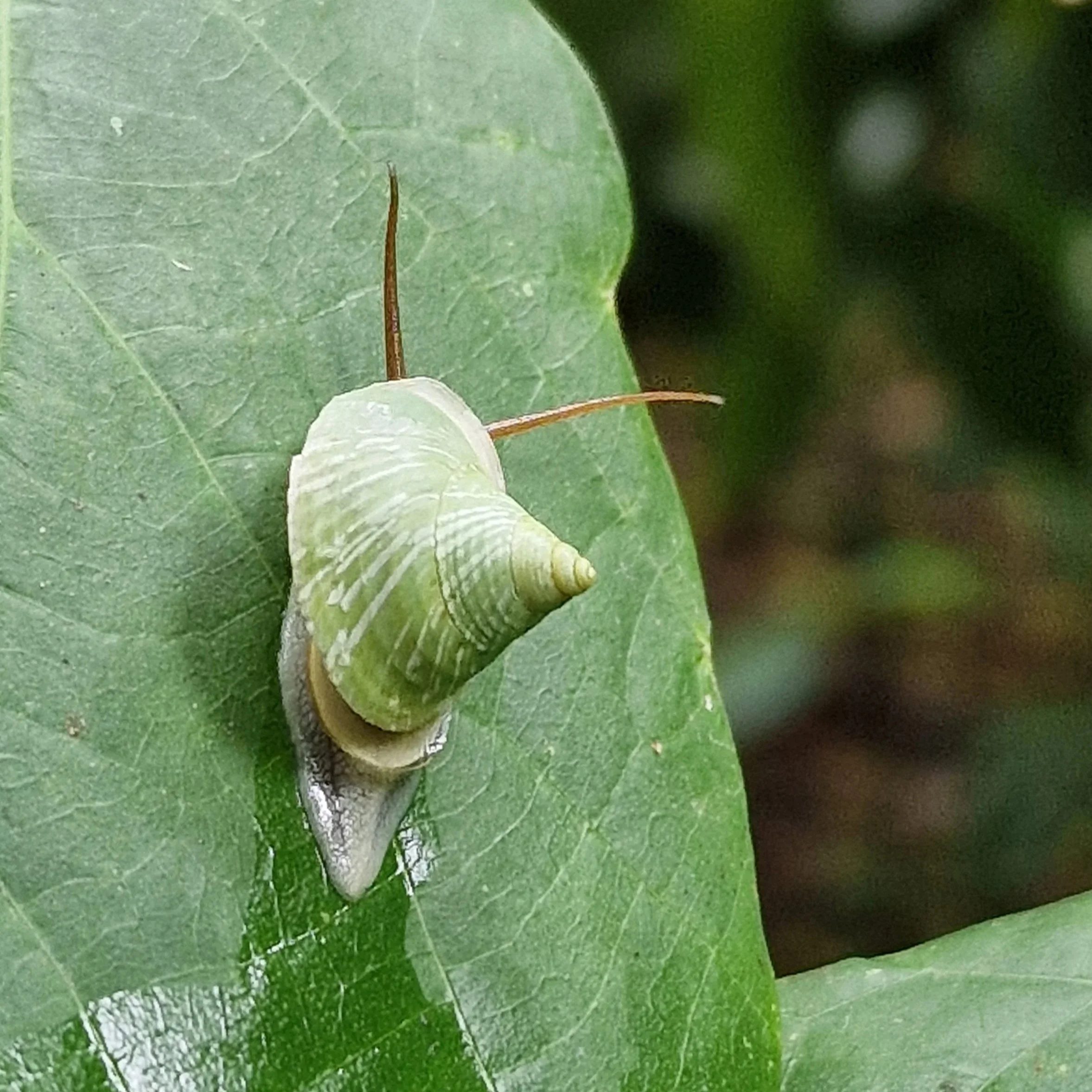
There are trails right behind the lodge, however we went by boat across the river. They provided boots as it really was very muddy and very wet! The climate in Sukau is different from Lamag. Lower Kinabatangan is significantly more humid and hotter than upper Kinabatangan. Our guide Bruno shared his knowledge about the jungle, which provides food and also medication not only to the animals but also to the people. He showed us how to find fresh and safe drinking water inside branches and roots and how to collect it, how to make soap with leaves, taught us about toxic animals and medicinal plants. He let us smell, touch and try everthing that was safe. We learnt that crocodiles can run up to 35 km/h on land and that they are able to leap up to 3 m. He told us how he is involved in rainforest conservation and restoring land used for plantation.
Cultural Immersion
At the Orang Sungai Gallery we learnt about the rich culture and heritage of the people of Sukau Village. The “Orang Sungai” - which translates as “River People” - are a group of indigenous people native to the state of Sabah, Malaysia. Groups of communities live along the rivers of Kinabatangan, Labuk, Kudat, Pitas and Lahad Datu. For millennials, the indigenous Orang Sungai of the Lower Kinabatangan have been living off the rainforest for food, medicine, household goods and products of trade. The name "Orang Sungai" is a collective term that was first coined during the colonial British rule for these communities living along the Kinabatangan River. However, they would identify themselves by their tribal names. Formerly traditional hunters, fishermen and loggers, the Orang Sungai became viable farmers but now working more and more in tourism, in hotels, as guides, and in wildlife and rainforest conservation.
We learnt about the old and new ways of life of the Organ Sungai, directly from them. They showed us the tools and weapons they have been using for thousands of years, such as machetes and blowguns (so called “sumpit”). Although the Orang Sungai live a rather modern lifestyle, many of them are still capable of building blowguns and using them for hunting. Our guide Bruno told us how he would roam the jungle with a mini-machete as a kid and later as a teenager in a loincloth. Our other guide Ivy played music for us on a traditional instrument. We could ask all our questions and they openly answered all of them.
What to bring
Sukau is rather “civilized”. It is a village with streets, jetties and proper hotels with regular hotel rooms. For the wildlife cruises, you do not need any special clothes or items. Just bring whatever you would bring to a stay in a hotel with some easy outdoor activities. Here is my list of essentials that you need to make your river safaris and your jungle walks a pleasant experience:
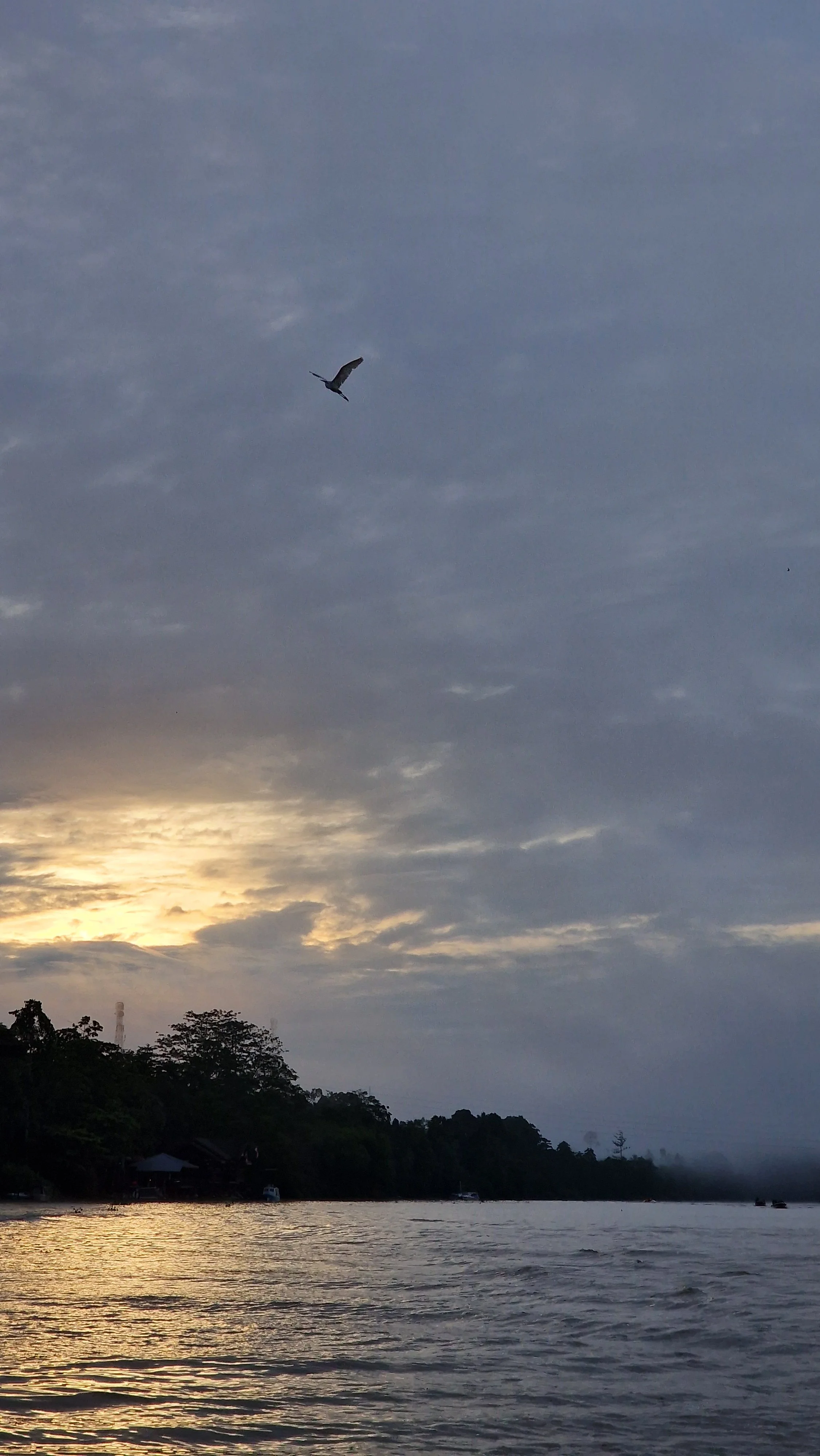
Long clothes made of breathable fabrics such a linen, cotton or viscose. Lower Kinabatangan is hot and humid. Synthetic materials will make you sweat more and stink. Long sleeves and long pants protect your skin from the hot sun during the day and the mosquitos at night, as well as from the leeches during the jungle walks. There is no shade when you are in the boat so you want to cover yourself a bit.
Hat and sunglasses. As said above, there is no shade in the boat so you want to cover your head too. A waterproof hat comes in handy when it is raining and it most probably will rain one day or the other.
Sunscreen. Whatever you cannot cover with fabric, protect with sunscreen
Mosquito repellent. The mosquitos are merciless and bite through thin fabric or find that little bit of bare skin. Spray your clothes as well as every bit of uncovered skin.
Comfy shoes. There is no need for special footwear on the boat. Wear your sandals or flipflops. It is a bit wet and slippery on the boat so go for something anti-slip.
Socks. For the jungle walks, they provide rubber boots because it is super wet and muddy in the rainforest. Bring a pair of socks so that you do not have to go with bare feet inside rubber boots that other people have worn before you.
Rain gear. I brought my jacket and my pants. One of these cheap plastic rain capes does the job too. Be aware that the seats in the boat get wet and you will get a wet backside if you are wearing normal pants. So either wear waterproof pants or bring something dry to sit on.
Umbrella: If it is raining a lot (and it probably will rain a lot since you are in a rainforest), an umbrella comes in handy for walking around, e.g. from your lodge to the dining area.
There is no need for special leech socks. I considered getting a pair but in the end, there were basically no leeches. I had one sitting on my sleeve that I just flung off. Just check yourself regularly and ask somebody to quickly check your back and you should be fine. Sturdy fabrics that stop mosquitos from biting protect from leeches too. I just put my pants inside my socks and all was fine.
Powerbank. I always had a powerbank with me, in case I would run out of battery on my phone in the middle of a cruise.
Torch. There is no need for torches on the night cruises but it comes in handy during the night walks. Bring one that has a red light function. The red light does not attract insects, that might attack you.
Some final thoughts
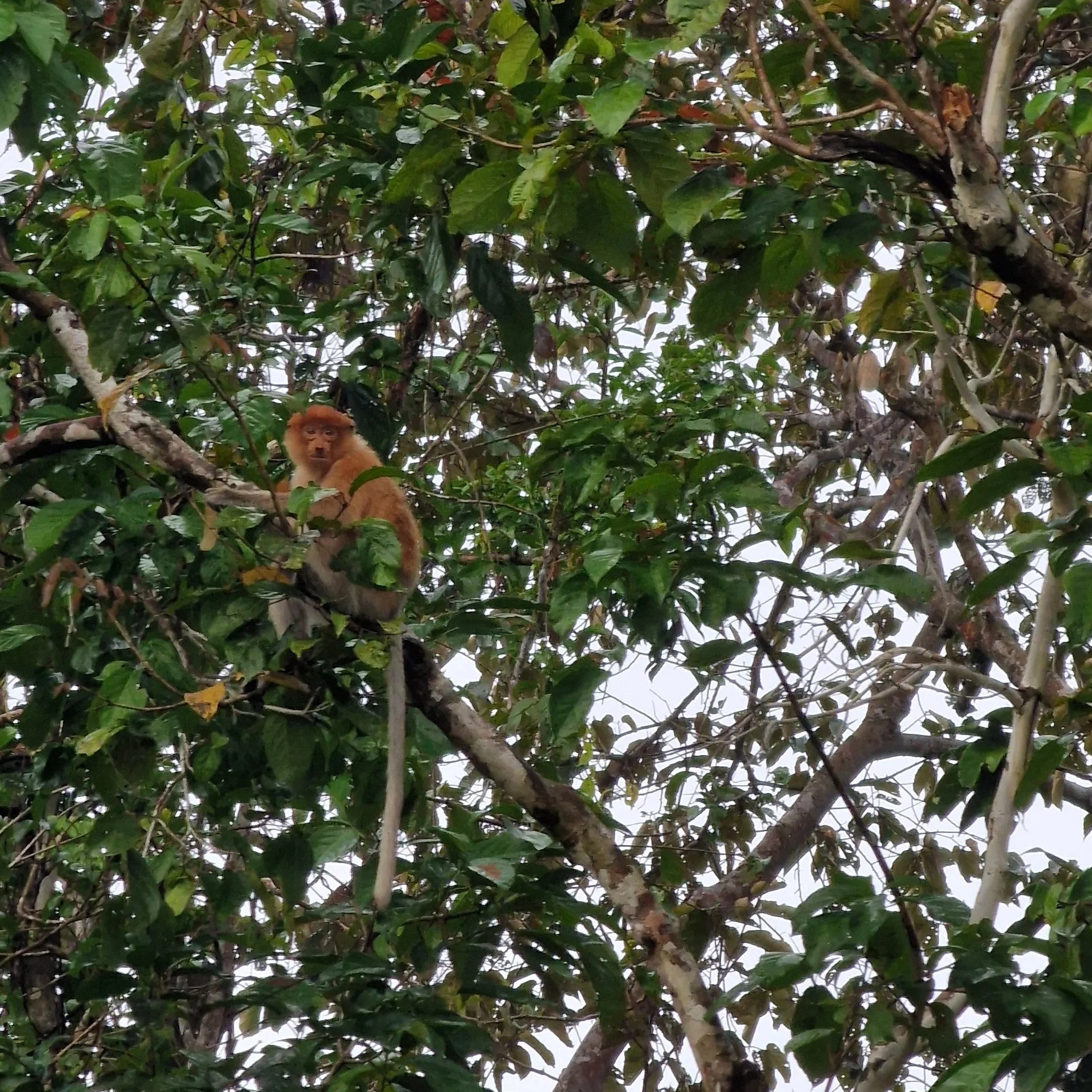
I have mixed feelings about my stay in Sukau and the wildlife safaris I did there. The rainforest and the wildlife are treated by many tourists as if it were Disneyland. It gets very accessible in a extremly comfortable way by just sitting on a boat and driving up to the animals that are cramed together in that little strip of jungle which is left around the shores of Kinabatangan. Looking at Google Maps or flying from Tawau to Sandakan reveals that Sabah is one giant big plantation. There are only little patches of rainforest left here and there. The animals are fighting for survival in these patches of rainforest. When they venture into plantations in search of food, they are considered pests, while in reality the plantations are diminishing their natural habitats and their food sources. Since the space that the animals have is so small, it is zero effort to spot them. I was with other tourist on the boat that labled anything that was not the big five as “boring”, fighting for the best places on the boat to take pictures and show them off as trophies on social media.
On the other hand, wildlife tourisms puts a spotlight on the destruction of their natural habitat. The wildlife tourism brings perspectives, work and money to the locals. They find better paid jobs in tourism or in conservation. Our guides are very involved in conserving and protecting Kinabatangan Wildlife Sanctuary. They work with and for the Sanctuary, counting animals, cutting invasive plants, building wildlife corridors, saving orphaned animals and so on. They are restoring plantations, giving the land back to the jungle and its animals. It gave me a glimps of hope that the juvenile Orangutan I took pictures and videos of will not be the last of its kind but has many descendants that can happily live in an intact rainforest stretching through all of Sabah.
More about Sabah, Borneo
Into the wild - Wildlife cruising at the Oxbow lake in Lamag
Orangutans, Sun Bears and the Rainforest - Four days in Sepilok
Hiking and snorkeling in Sabah, Borneo - Dohey Bulang, Mantabuan and Sibuan
Peninsular Malaysia and its small islands
Travelling through South East Asia? What about…
Subscribe to gracefulinsights.space WhatsApp Channel