
Shooting and sustainability: a contradiction?
Why rubber granulate bullet traps are the best choice for modern shooting ranges
Shooting is often associated with noise pollution, lead and soil contamination, but not with environmental stewardship and sustainability. However, a closer look reveals that sustainability in shooting sports is nonetheless possible.
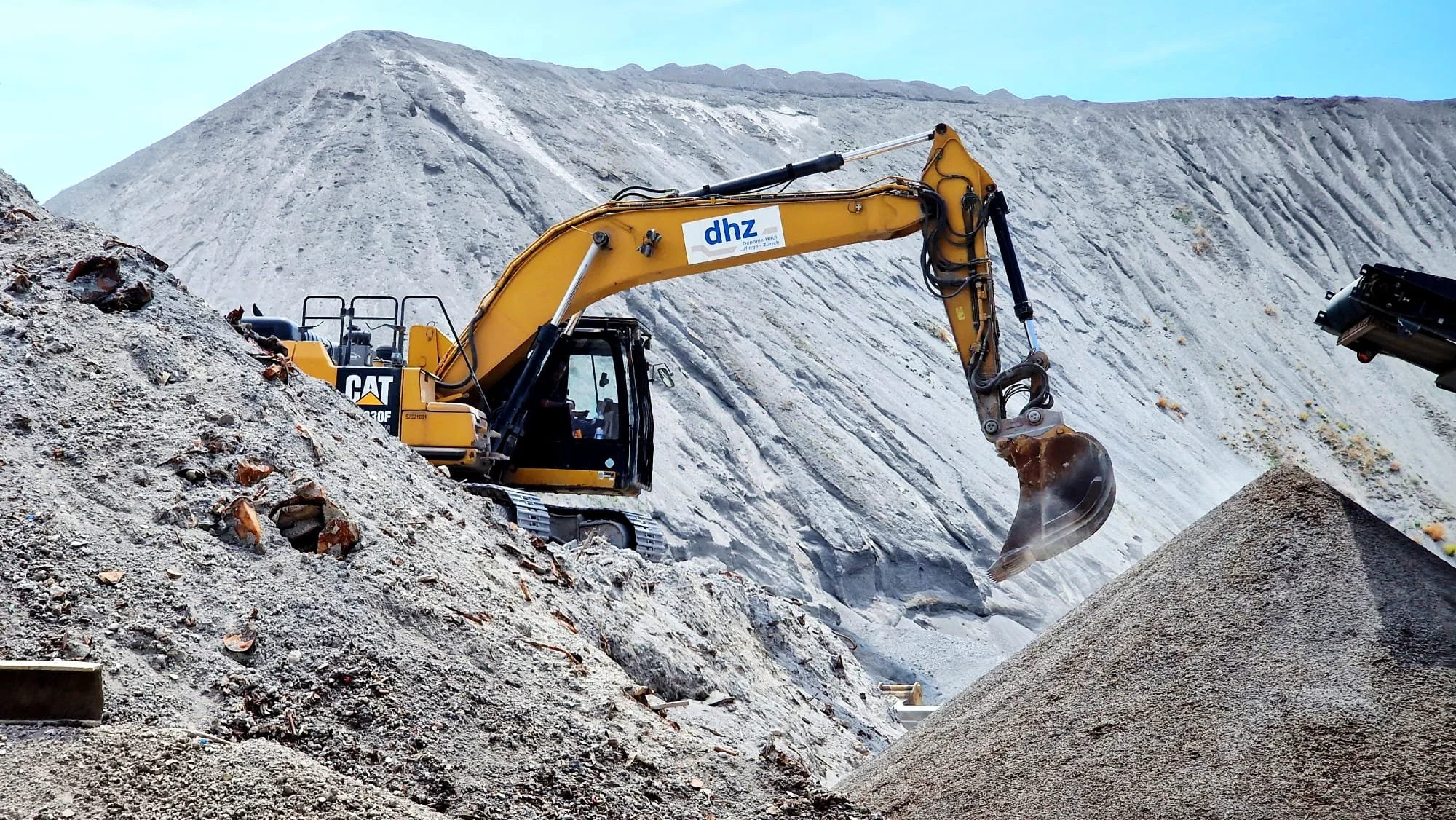
DHZ AG in Lufingen, Switzerland, is a company specialized in “urban mining”, not only recovering metals from waste-to-energy plant incinerator slag but also cleaning rubber granulate bullet traps.
Advantages of rubber granulate bullet traps
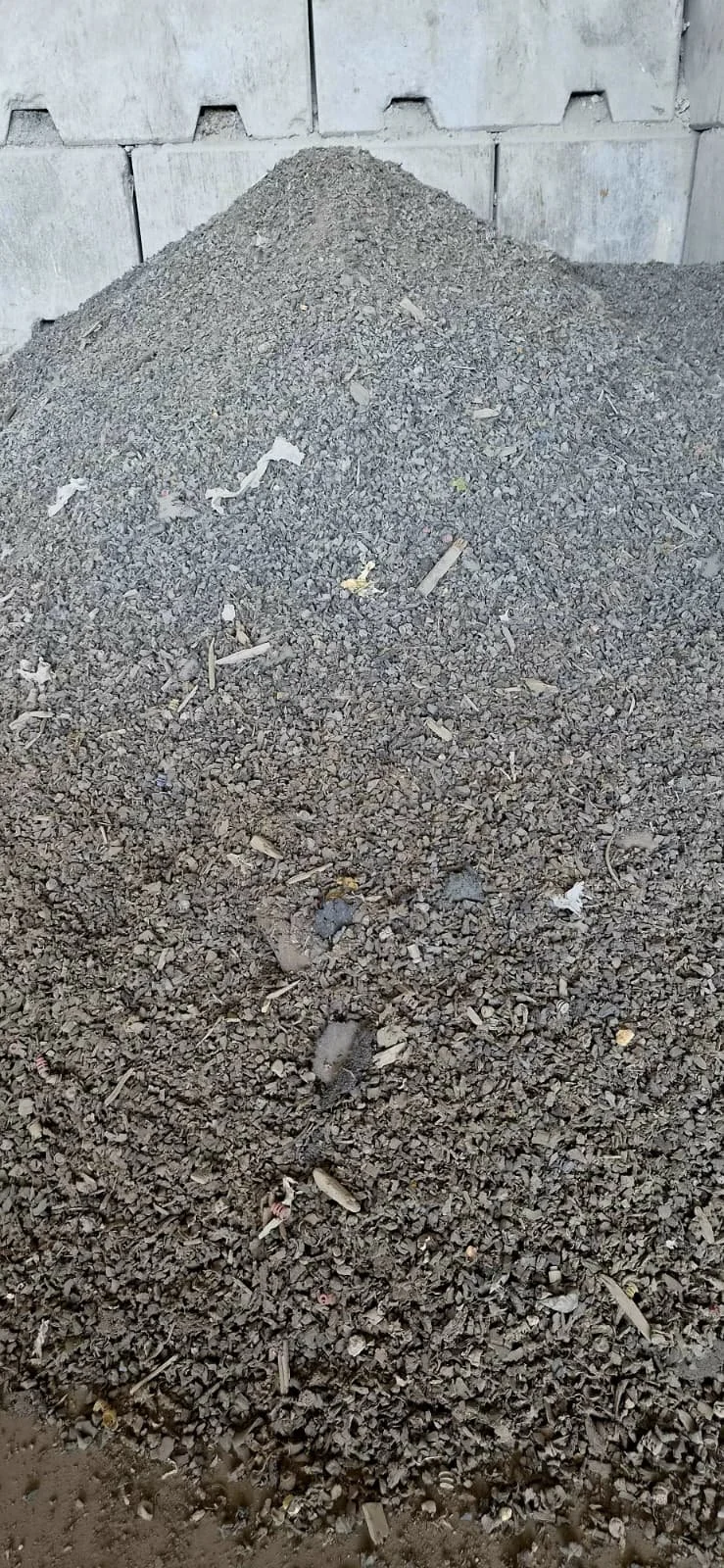
Rubber granulate bullet traps have many advantages. They are easy to maintain and valuable metals can be recovered.
Conventional bullet traps in shooting ranges are severely contaminated with different heavy metals. Due to the composition of the bullets, lead accounts for the largest portion of the contamination. However, modern shooting ranges are nowadays equipped with environmentally friendly bullet traps, which ensure a high degree of emission-free operation, such as the rubber granulate bullet traps of the Swiss Shooting Range AG in Spreitenbach, Switzerland.
The bullet trap at the end of a shooting lane is a crucial part in any shooting range: The fired projectiles are reliably stopped by the viscoelastic properties of the granules, reducing the risk of ricochets and stray shots. Rubber granulate bullet traps consist of a special rubber granulate used as filler material. The dense fill, made from recycled rubber or plastic, gently slows down the incoming projectiles, resulting in virtually no splinters or sparks and reducing the risk of ricochets to practically zero. Another advantage of rubber granulate bullet traps in modern indoor shooting ranges, such as the Swiss Shooting Range, is noise reduction. When a projectile strikes the granulate, it produces only a muffled sound, which creates a quieter training environment for shooters and allows for better concentration. Furthermore, dust and pollutant emissions are significantly reduced with rubber granulate bullet traps. Because the projectile does not shatter, less lead dust is released, which improves air quality in the shooting range. Furthermore, another major advantage of rubber granulate bullet traps over steel bullet traps, sand, and gravel bullet traps is their comparatively easy maintenance.
Bullet traps must be cleaned regularly because over time, projectiles, plastic wads, and other waste accumulates in the granulate. DHZ AG in Lufingen processes and cleans the granulate bullet trap of the Swiss Shooting Range. Founded in 2009, DHZ AG recycles slag and waste using modern facilities and recovers valuable metals. The inevitable residues produced in the process are safely stored in the company’s own modern landfills.
"Urban Mining" to recover strategic raw materials
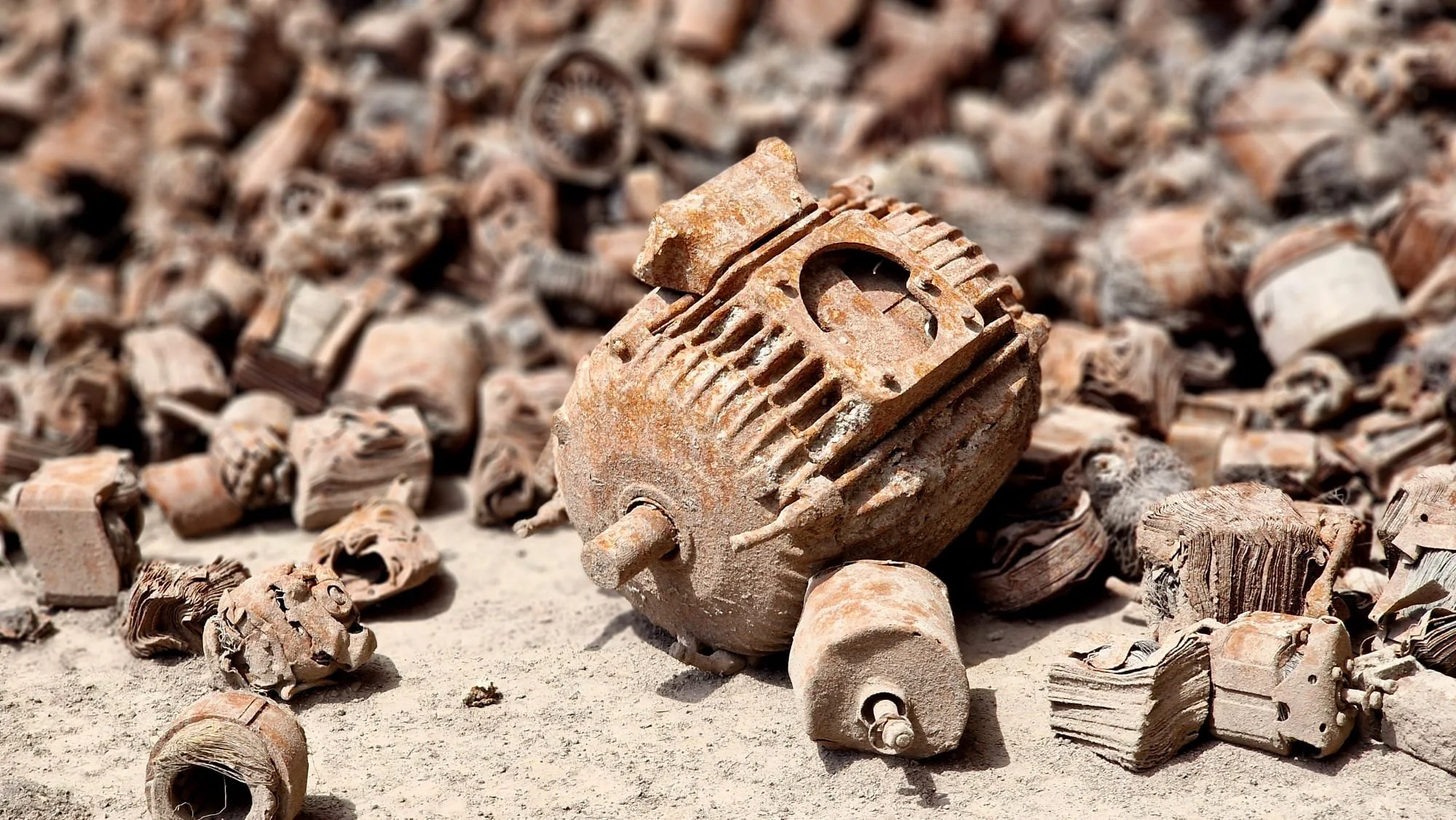
The metals recovered through “urban mining” are sold to smelters both domestically and abroad.
DHZ AG specializes in so called “urban mining”, the recovery of metals such as steel, aluminum, copper, gold, and silver from the slag produced by municipal waste incineration plants.
In Switzerland, approximately 4 million metric tons of combustible waste from households, industry, and commerce that cannot be recycled are generated each year. This waste is collected and thermally treated in waste-to-energy plants. The heat released generates electricity and heats buildings. Incineration reduces the volume of waste by about 90%. The remaining 10% is left behind as slag. Incineration at waste-to-energy plants is not the final stage of waste treatment, as the slag contains strategic raw materials that are essential for key economic sectors.
In Switzerland, more than 800,000 metric tons of incineration residues from the furnace and flue gas cleaning are generated annually, which still contain recyclable metals. Waste from socioeconomically more affluent areas generally has a higher potential for material recovery. As a result, the thermal utilization of this waste and the subsequent metal recovery from the incineration slag can yield a higher economic return than waste from lower-income areas. DHZ AG carries out the entire urban mining process, from separating the metals from the slag and selling the metals to the final disposal of the remaining slag at a landfill. DHZ AG sells the sorted metals directly to metal smelters in Switzerland and abroad.
A clean bullet trap thanks to supersort®
The supersort® unit, developed by DHZ AG itself and in operation since July 2013, processes approximately 120,000 metric tons of slag annually. Using state-of-the-art technology, the feed material is first crushed, then metals are sorted based on their different physical properties. Heavy metals and non-ferrous metals are separated based on differences in physical properties, such as density or magnetism. The residues are transported via a conveyor belt to the adjacent Häuli landfill, where they are disposed of safely and in compliance with the law. At its Oberglatt facility, DHZ AG processes non-ferrous metal concentrates and other metal-containing waste by first removing impurities in the dust collection system and then purifying the metal. The resulting waste products are transported to the landfill “Häuli”, while the metals are sold on the global market.
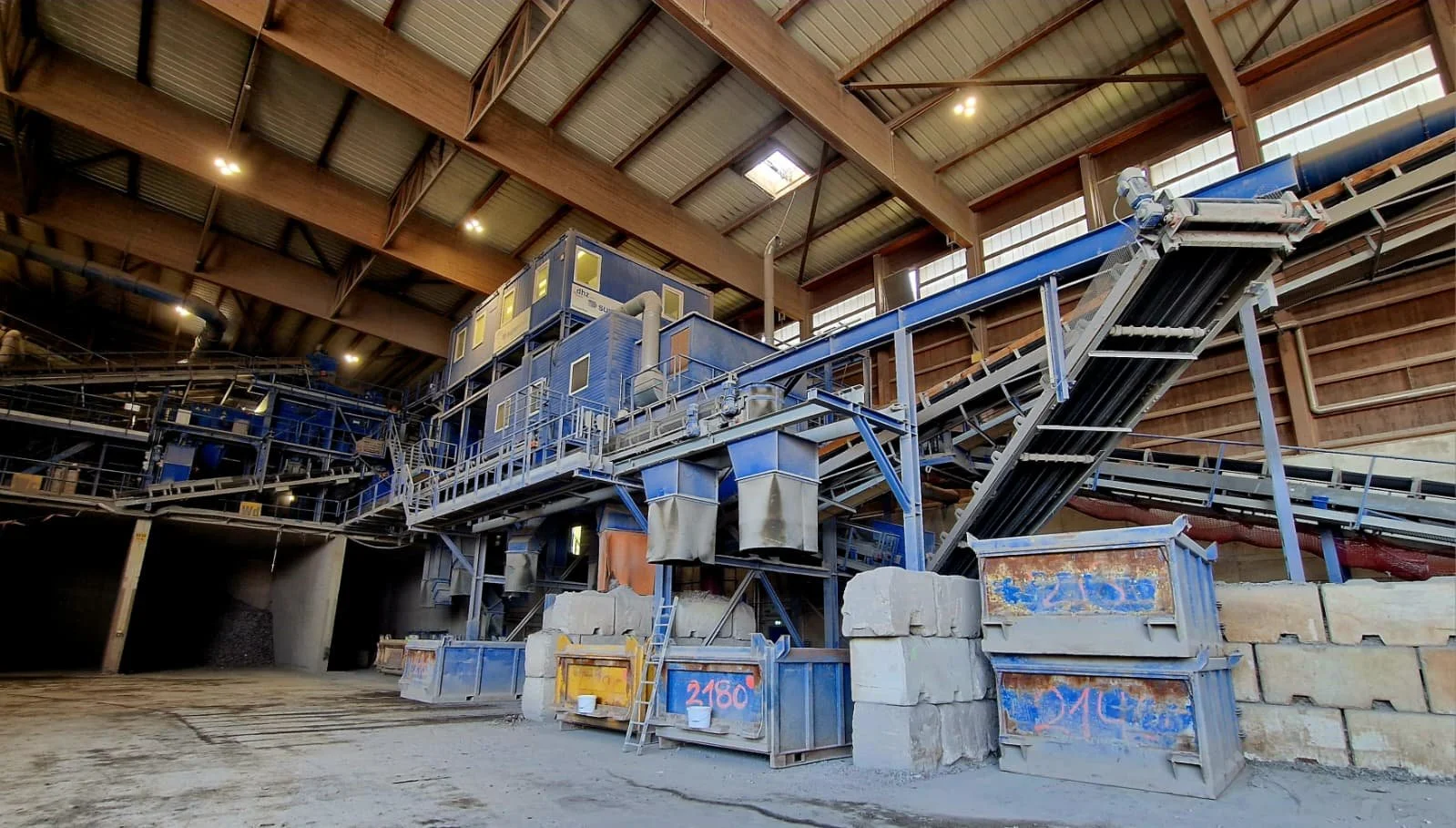
The supersort®, developed by DHZ AG, sorts the various metals.
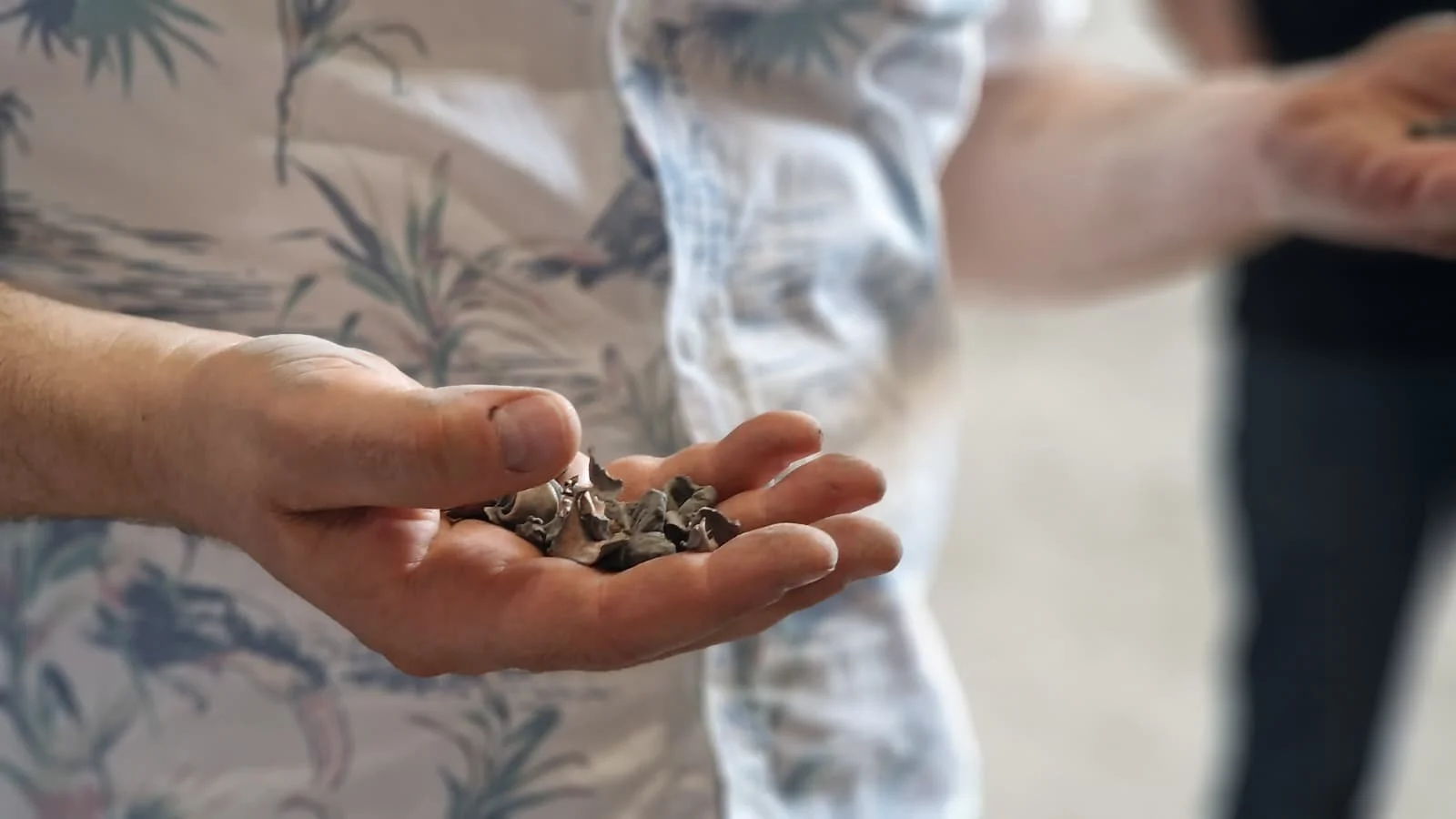
The rubber granules from the bullet trap are mechanically cleaned and recycled in the supersort® system. The contained metal is returned to the cycle.
The bullet trap of the Swiss Shooting Range is cleaned and processed using the supersort® dry mechanical method: A specialized company uses a suction excavator to remove the top layers of the bullet trap until no bullet fragments remain. The extracted granulate is then shipped to Lufingen to DHZ AG, where the supersort® separates the lead and other metal fragments from the rubber granulate. When projectiles strike the bullet trap, the rubber granules are subjected to mechanical stress, which reduces their particle size and causes wear. These small fragments are properly disposed of by DHZ AG. The remaining granules are screened to the specified particle size and returned to the bullet trap. To compensate for the loss, fresh granules are added at the end of the process.
The lead and other metals recovered this way are recycled. The Swiss Shooting Range contributes to greater sustainability in shooting sports by reusing and reclcying its rubber granulate bullet traps.
Is Switzerland facing a waste crisis?
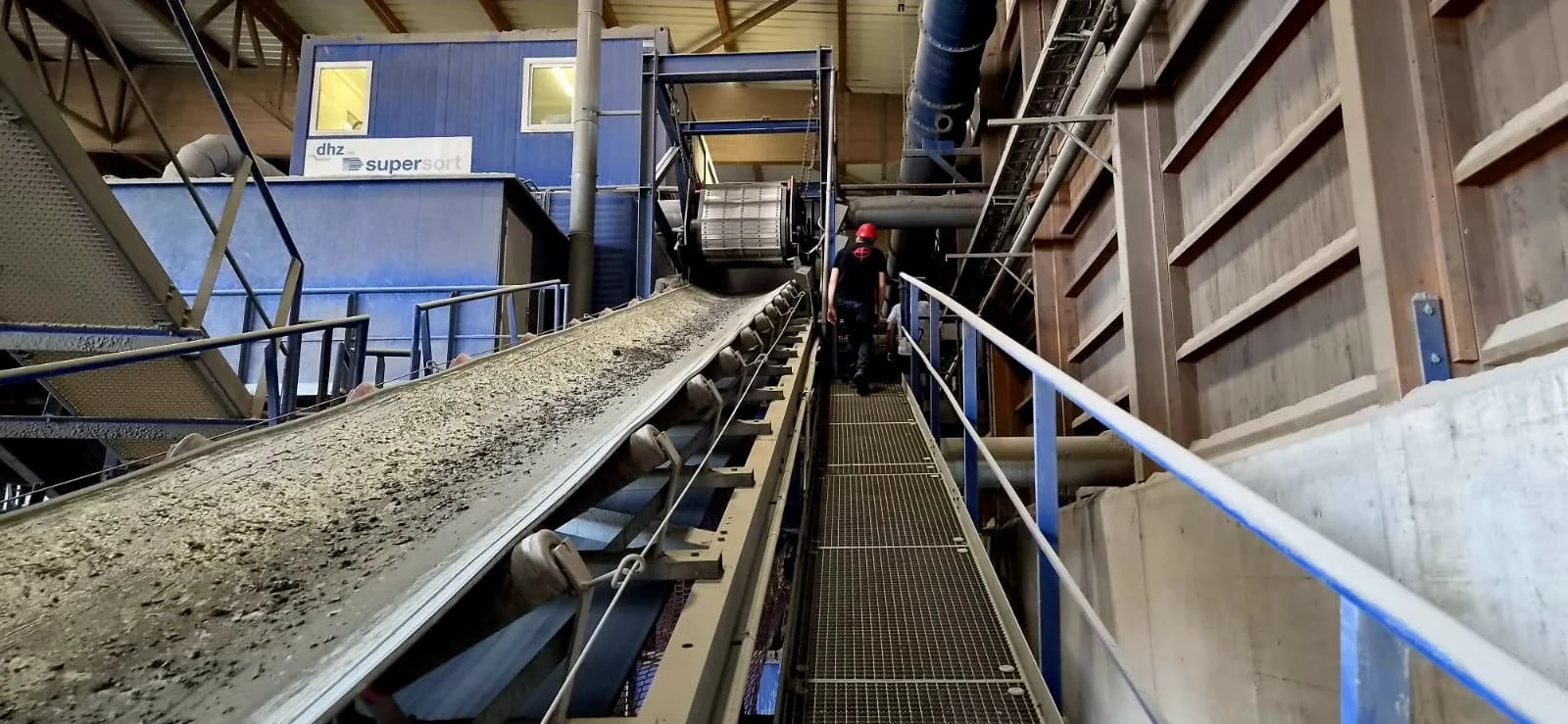
Participants in the tour of DHZ AG had the opportunity to see the supersort® up close.
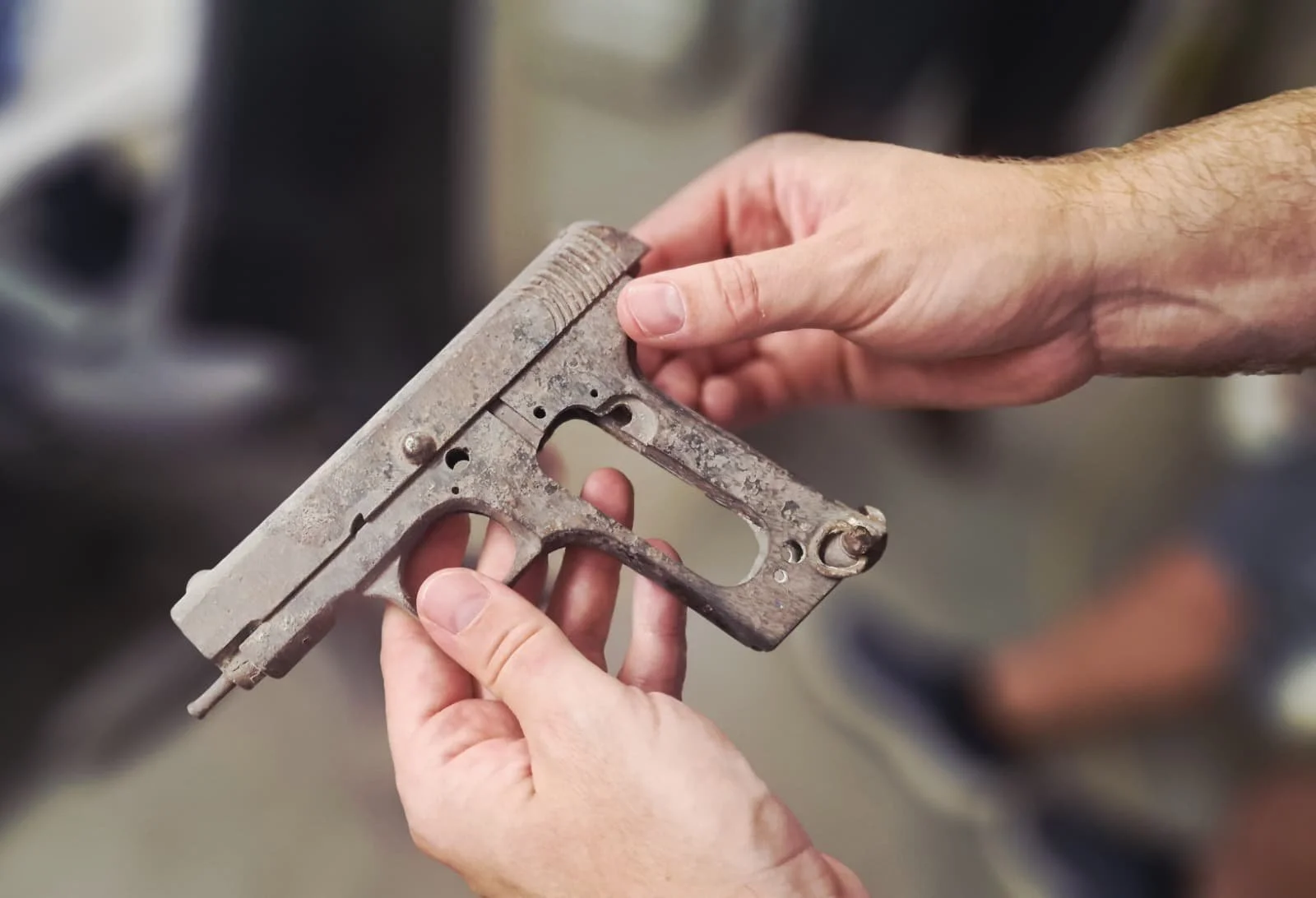
Ammunition remnants and old weapons are subject to the War Material Act and require an export license from SECO when sold abroad.
On a hot summer day in June 2026, participants of the exclusive tour organized by Swiss Shooting Range had the opportunity to observe the bullet trap recycling process at DHZ AG up close: Managing Director Benjamin Blumer guided the visitors through the “Häuli” landfill and showed them the various steps in the urban mining process. During the event, participants learned not only that an export license from SECO is required to export bullet casings abroad because deformed bullets fall under the War Material Act, but also that Switzerland is facing a waste crisis: There are fewer and fewer suitable landfills — such as the “Häuli” landfill — for the non-recyclable residues from waste incineration, which is why Switzerland faces an acute shortage of landfill capacity for waste incineration plant slag (Type D landfills) in the medium term.
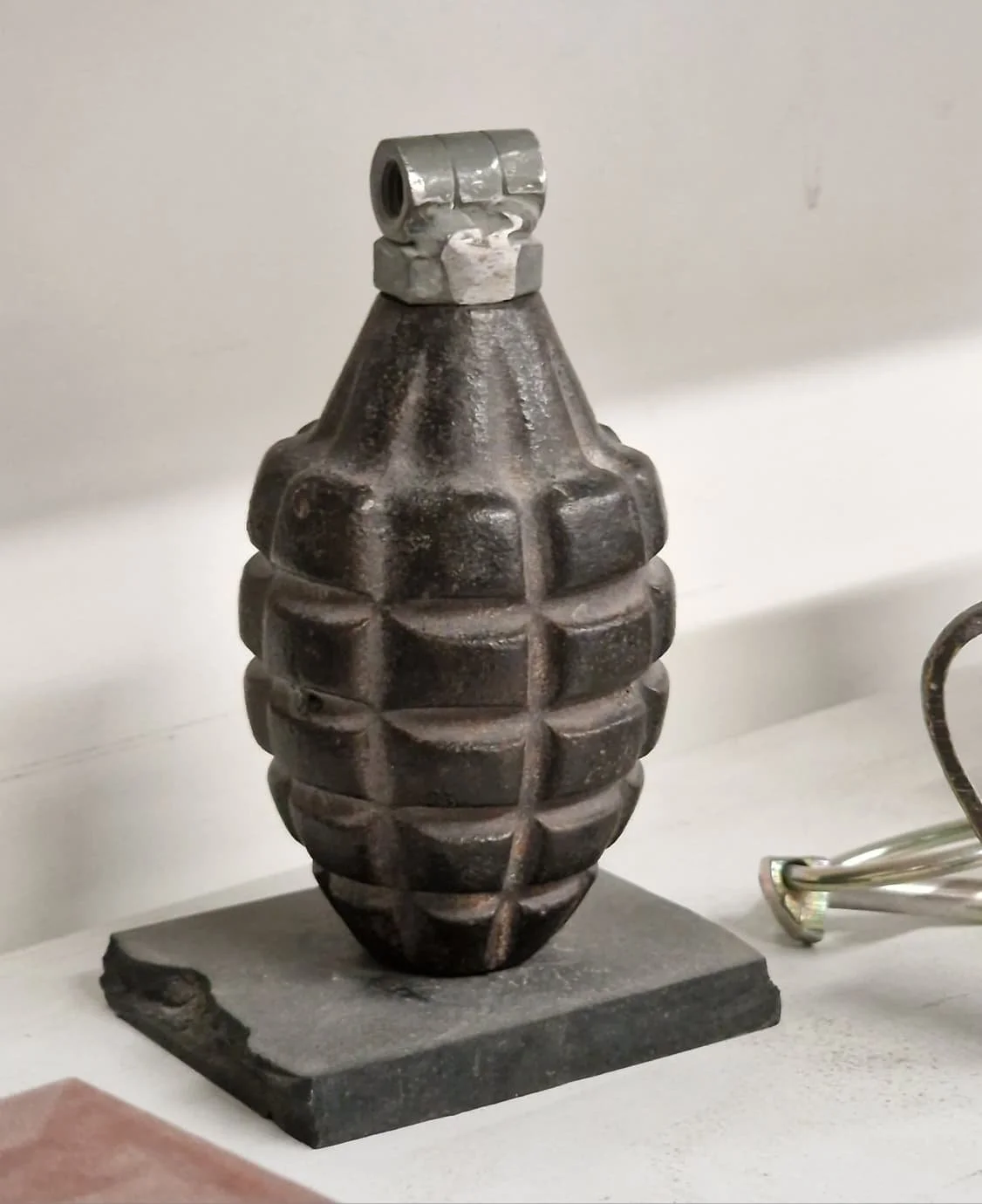
All sorts of curiosities can be found through “urban mining.”
According to recent studies by the Association of Waste Incineration Plant Operators (VBSA), the amount of landfill space currently available for the disposal of incineration residues throughout Switzerland is sufficient for only a maximum of five years. The planning horizon for a new landfill is around ten years, while construction takes about two years. Waste incineration plants depend on guaranteed landfill capacity. Slag processing plants such as DHZ AG can significantly alleviate the strain on landfill capacity, particularly through metal recovery and the recycling of mineral components. Urban mining reinforces this effect in the long term by reducing the overall volume of waste generated and making better use of secondary raw materials. Both approaches are therefore important building blocks of a circular economy, but they do not completely replace landfills. Sufficient landfill capacity will continue to be needed for non-recyclable waste. The Häuli landfill, with its currently approved capacity of 2 million cubic meters, will reach capacity in 4 to 5 years. If the planned expansion project cannot be implemented within the next few years, this would result in significant shortfalls in Zurich’s waste management planning and fundamentally jeopardize the canton’s waste disposal security after 2030.
Greater Sustainability in Shooting Sports
The recycling of rubber granules from bullet traps impressively demonstrates the potential of modern urban mining processes. Through targeted processing, valuable materials can be recovered and reused. What once was considered waste becomes a valuable raw material. With its rubber granulate bullet traps, Swiss Shooting Range makes an important contribution to resource conservation and the circular economy.